Does a hot tub need a heat pump?
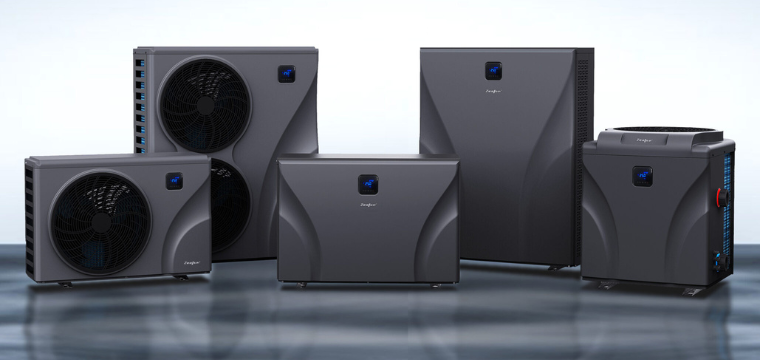
- Category: Heat pumps
- Published at: 17.02.2026 11:35
Wood-fired hot tubs in Latvia are becoming increasingly popular — they provide a SPA experience in your own yard in any season. However, this raises a very specific question:
How to ensure that the water in the hot tub is always warm while keeping maintenance economical?
Many start with a wood stove or electric heater, but after the first season they begin looking for a more efficient solution. This is exactly where a heat pump for a hot tub comes in.
In this article you will learn:
- when a heat pump for a hot tub is really necessary,
- how much electricity it consumes,
- how to choose the right capacity.
Why does hot tub maintenance often become inconvenient without a heat pump?
The volume of a hot tub is usually only 1–2 m³, which means two things:
- the water heats up relatively quickly,
- the water also cools down very quickly.
In Latvian conditions, even in summer heat losses during the night are significant. If the hot tub is outdoors:
- in one cool night the temperature can drop by 3–6°C,
- in windy conditions — even more,
- without a cover — faster than expected.
Result in practice:
- you must reheat before each use,
- electricity or firewood consumption increases,
- spontaneous evening bathing is often not possible.
For regular use, a hot tub heat pump becomes an essential comfort element.
What exactly does a hot tub heat pump provide?
A modern inverter heat pump for a hot tub does not simply heat the water — it maintains a stable temperature with minimal consumption.
Main benefits:
Stable water temperature
- automatically maintains the required temperature,
- no large temperature fluctuations,
- the hot tub is ready for use at any time.
Significantly lower operating costs
- electric heater → 1 kW electricity = 1 kW heat
- inverter heat pump → 1 kW electricity = 5–10× more efficient in favorable conditions
This means significantly lower bills in the long term.
Quiet and automatic operation
- no need to fire up,
- no need to monitor,
- no smoke or ash,
- modern models operate at ~30–40 dB.
Longer hot tub season in Latvia
- early spring,
- late autumn,
- cool summer days.
Models operating down to -10…-12°C significantly extend usability.
Which heat pump capacity is needed for a hot tub?
- up to 1.5 m³ → ~5–6 kW
- 1.5–2.0 m³ → ~6–8 kW
- 2.0–3.0 m³ → ~8–9 kW
If the heat pump is mainly intended for temperature maintenance, lower capacity is sufficient; if regular heating from cold water is planned, a more powerful model is recommended.
3 factors that most affect consumption
1. Thermal cover
- reduces heat loss by 50–70%,
- significantly reduces heat pump runtime,
- speeds up heating.
2. Inverter technology
ON/OFF heat pump:
- frequent start/stop,
- louder,
- less efficient in maintenance.
Full Inverter:
- operates at 20–100% power,
- quieter,
- especially efficient for hot tubs.
3. Operation in low temperatures
If you plan to use the hot tub outside the warm summer months, choose a model designed to operate at least down to -10…-12°C.
When might a heat pump for a hot tub not be necessary?
- you use the hot tub very rarely,
- you don’t mind firing it up each time,
- temperature fluctuations don’t bother you,
- priority is minimal initial cost.
UX vs PBS vs PX — which heat pump to choose for a hot tub?
| Situation | Recommended model | Why |
|---|---|---|
| Small hot tub (up to ~2 m³), regular use | UX | Compact, quiet Full Inverter solution with excellent efficiency for temperature maintenance. |
| Budget option for summer season | PBS | Simpler and more affordable heat pump, suitable if the hot tub is mainly used in warm season. |
| Use in cooler weather or extended season | PX | More powerful premium inverter model with stable operation at lower outdoor temperatures. |
| Maximum quietness near the terrace is important | UX or PX | Both series feature inverter technology and lower noise than ON/OFF models. |
| Priority — lowest initial cost | PBS | Most affordable solution but with lower comfort and efficiency. |